
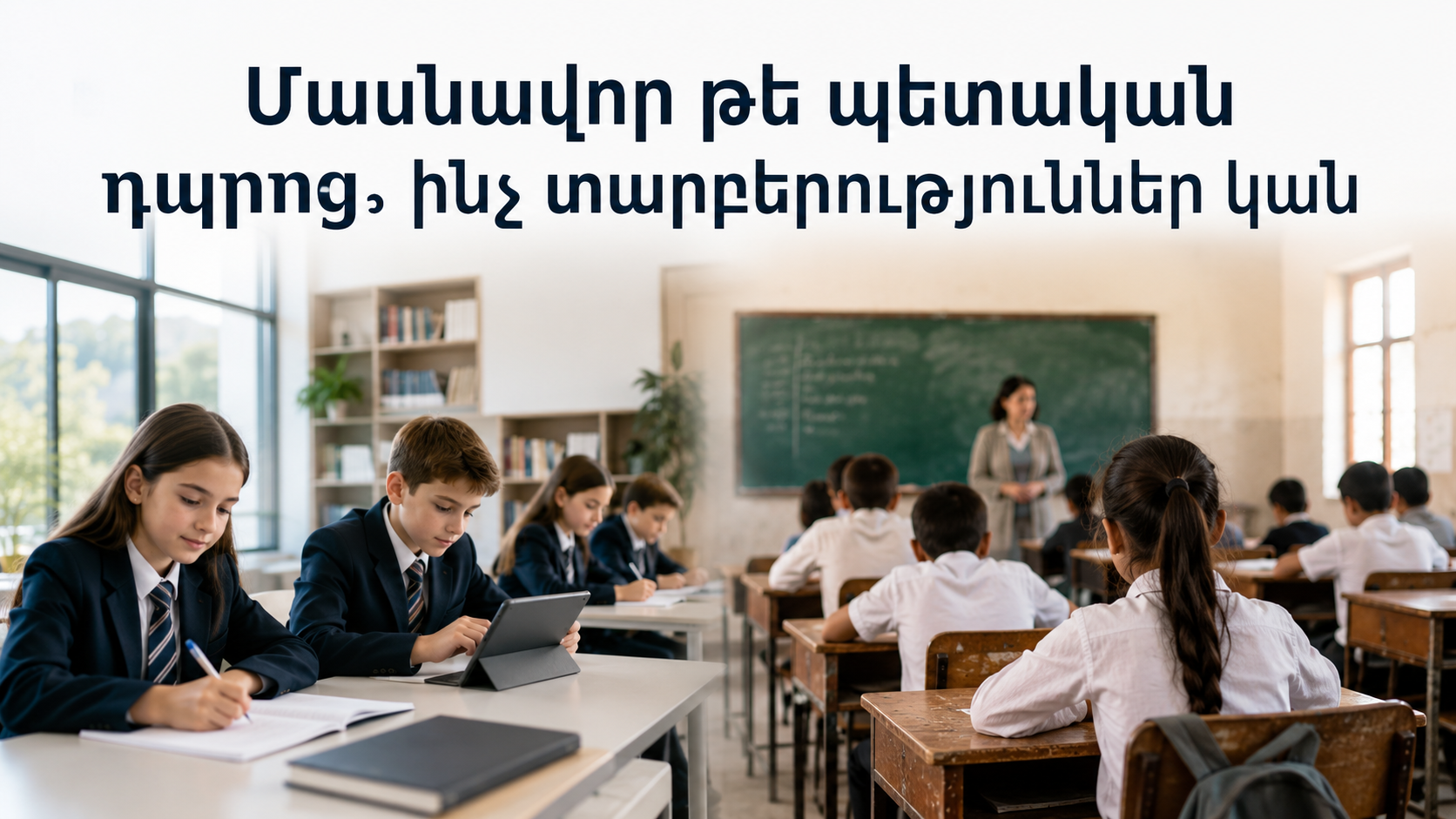
Private or Public School: What Are the Differences?
Choosing a school for your child is one of the most important decisions parents make. Many families face the same question: should they choose a public school or a private school?
Both options can be good, depending on the child’s needs, the family’s expectations, and everyday practical factors such as location, budget, schedule, and learning environment.
The real question is not “Which one is better?”
The better question is: Which school is the right fit for your child?
1. Tuition and Affordability
One of the most obvious differences between public and private schools is cost.
Public schools are usually free, which makes them accessible for many families. However, parents may still have additional expenses such as books, uniforms, meals, extracurricular activities, transportation, or school events.
Private schools usually charge tuition. Depending on the school, the fee may include additional services such as extended-day programs, meals, foreign languages, technology classes, creative activities, international programs, or individual support.
When comparing schools, it is important to ask not only “How much does it cost?” but also “What is included in the price?”
Useful questions for parents:
- What is included in the monthly or annual tuition?
- Are there any additional fees?
- Does the school provide enough value for the price?
- If the school is public, are the needed extra services available separately?
2. Class Size and Individual Attention
Private schools often have smaller class sizes. This can allow teachers to spend more time with each student, notice learning difficulties earlier, and provide more individual feedback.
Public schools may have larger classes. This is not always a disadvantage. A larger class can help children communicate with different personalities, develop social skills, and learn in a more diverse environment.
The key is not only the number of students in the classroom, but also the teaching style and the school’s approach.
Parents can ask:
- How many students are in one class?
- Does the teacher have time to support students individually?
- How does the school help children who struggle?
- How does the school support children who learn faster?
3. Curriculum and Additional Programs
Public schools generally follow the national curriculum and educational standards. This provides a structured and predictable learning path.
Private schools also need to meet core educational requirements, but they often offer additional programs such as foreign languages, robotics, programming, art, project-based learning, international exam preparation, or advanced subject tracks.
If your family values strong English-language education, technology, creative learning, or international opportunities, a private school may offer more options. At the same time, a public school with a strong teaching team and active extracurricular environment can also be an excellent choice.
4. Languages and International Focus
Private schools often offer bilingual or multilingual programs. Some schools place strong emphasis on English, Russian, French, or other languages. This can be important for families who are thinking about international universities or future study abroad.
Public schools also teach foreign languages, but the depth, intensity, and teaching methods can vary from school to school.
Questions to ask:
- Which languages are taught?
- How many hours per week are dedicated to language learning?
- Is there speaking practice?
- Does the child learn to use the language, or mostly study grammar?
5. Environment, Values, and Discipline
School is not only about lessons. It is also the environment where the child spends a large part of the day.
Private schools often try to build a specific culture: a smaller community, active parent communication, project-based learning, and a values-based approach.
Public schools can offer a more diverse social environment. This can also be valuable, because children interact with peers from different families, backgrounds, interests, and personalities.
The most important thing is to understand where your child will feel safe, respected, and motivated.
Pay attention to:
- How do children communicate with each other?
- Is there a respectful and safe atmosphere?
- How does the school handle conflicts?
- How does the school communicate with parents?
6. Inclusion and Support
Every child has their own pace, personality, and needs. That is why it is important to understand how the school supports different learners.
Parents should ask both public and private schools:
- Is there a psychologist or support specialist?
- How does the school support children during the adaptation period?
- What happens if a child has learning difficulties?
- Is there an individual approach, or is every child expected to move at the same pace?
These questions are important for any school type.
7. Communication with Parents
Many parents pay attention to how open and responsive the school is.
Private schools often have more active communication with parents: regular meetings, individual feedback, digital platforms, parent communities, and progress updates.
However, this does not mean public schools cannot communicate well. In many cases, the quality of communication depends on the school leadership and teachers.
A good school should not only teach the child, but also communicate clearly and consistently with the parent.
Ask:
- How does the parent receive updates about the child’s progress?
- Is feedback regular?
- How accessible are the teachers?
- Does the school contact parents only when there is a problem, or also to share progress?
8. Admissions Process
Public school admission is usually connected to the child’s age, residence area, and official procedures.
Private schools may have additional steps such as interviews, entrance assessments, meetings with parents, child readiness evaluation, or a trial day.
Before choosing a private school, clarify:
- When does admission start?
- Is there an entrance exam or interview?
- What documents are required?
- Is there a waiting list?
- Can the child visit the school before the final decision?
9. Which One Should You Choose?
There is no one correct answer for every family.
A public school may be the right choice if:
- you want free education;
- the school is close to home;
- the school has strong teachers;
- your child feels comfortable in a larger and more diverse environment;
- you can organize extra activities separately if needed.
A private school may be the right choice if:
- smaller classes are important to you;
- you want more individual attention;
- foreign languages or international programs are a priority;
- you want more extracurricular options in the same environment;
- your family is ready to pay for these additional services.
Do not choose a school only because of its name or reputation. Visit the school, speak with the principal and teachers, read parent reviews, and compare several options.
10. Checklist for Parents
Before choosing a school, try to answer these questions:
- Will my child feel safe and comfortable in this environment?
- Does the school match our family’s values?
- Are the teachers open and accessible?
- Does the school communicate well with parents?
- Is the class size suitable for my child?
- Are the language and additional programs strong enough?
- If there is tuition, does the value match the price?
- Is the school close to home or easy to reach?
- Are other parents’ reviews trustworthy?
- How does my child personally react to the school?
Conclusion
The difference between private and public schools is not only about tuition. The difference can also be in the learning environment, programs, class size, communication, languages, support system, and parent involvement.
The best school is the one where your child can learn, grow, feel safe, and gradually discover their strengths.
On imaci.am, you can explore schools, compare key information, read parent reviews, and share your own experience to help other families make better decisions.
Explore schools on imaci.am