
21 June 2026
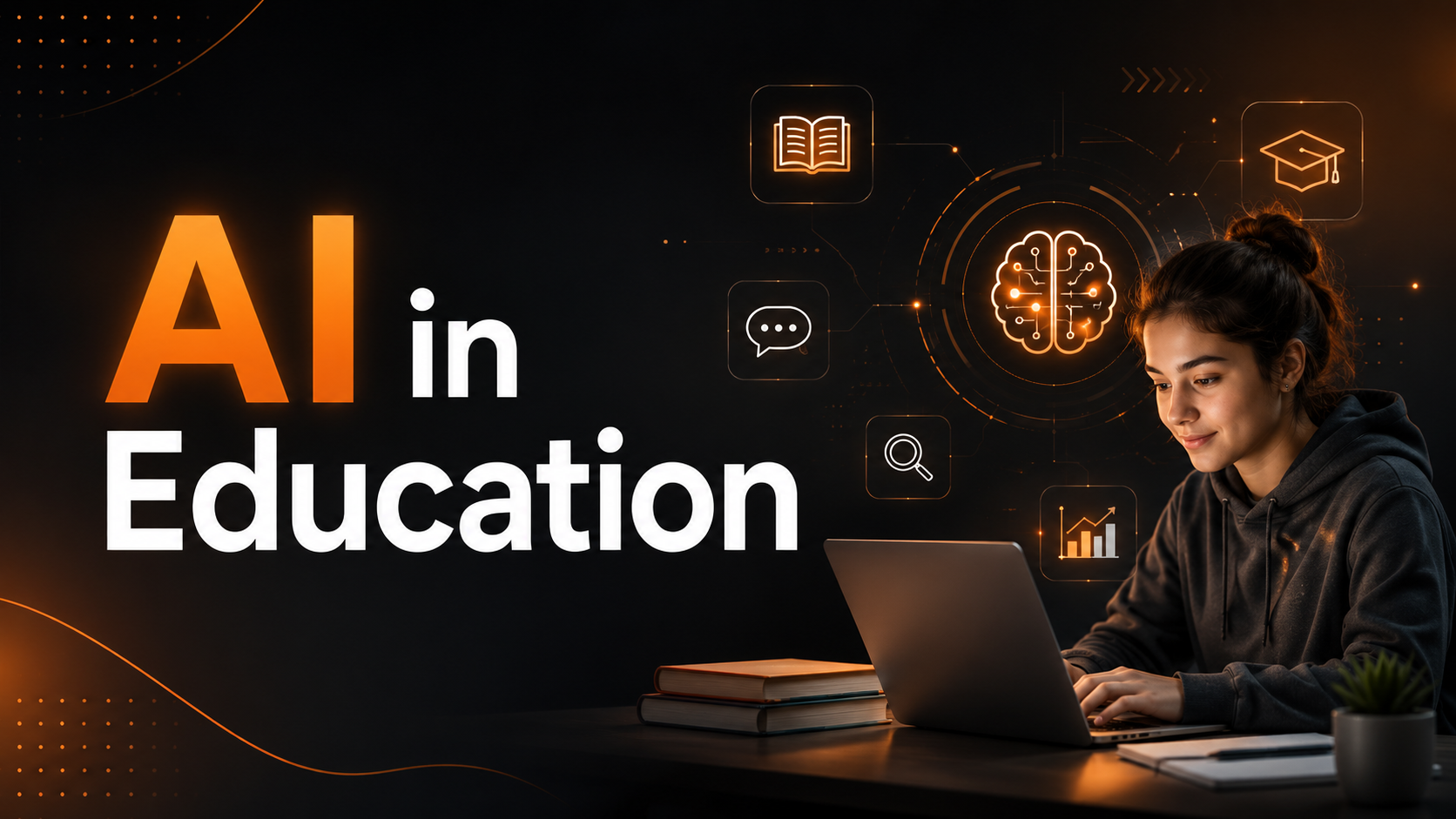
AI in Education: How Artificial Intelligence Is Transforming Learning in 2026
The Biggest Educational Shift Since the Internet
Education has experienced many transformations over the past decades, but few innovations have had the potential to change learning as dramatically as Artificial Intelligence.
What started as a technology used mainly by researchers and technology companies is now becoming a daily tool for students, teachers, schools, universities, and parents.
In 2026, the question is no longer whether AI will impact education.
The real question is:
How can students, parents, and educators use AI effectively and responsibly?
Why AI Matters in Education
For decades, education has followed a similar model:
One teacher
One classroom
One curriculum
One pace for everyone
But every student learns differently.
Some students need additional explanations. Others learn faster and become bored. Some prefer visual learning, while others learn through practice.
Artificial Intelligence makes it possible to create more personalized learning experiences.
Instead of adapting students to the system, AI helps adapt learning to the student.
Trend 1: Personalized Learning for Every Student
One of the most significant benefits of AI is personalization.
Modern AI-powered learning platforms can:
Identify strengths and weaknesses
Recommend learning materials
Create customized study plans
Adjust difficulty levels
Track progress over time
A student struggling with mathematics can receive additional exercises and explanations, while another student can move ahead with more advanced content.
This creates a learning experience that is much closer to having a personal tutor.
Trend 2: AI as a Study Assistant
Many students now use AI tools daily.
AI can help students:
Understand difficult concepts
Summarize long texts
Create revision notes
Generate quizzes and practice questions
Organize study schedules
Receive instant feedback
Rather than replacing learning, AI reduces the time spent searching for information and allows students to focus on understanding and applying knowledge.
Trend 3: Teachers Are Becoming Coaches and Mentors
One of the most common concerns about AI is whether it will replace teachers.
The evidence suggests the opposite.
The most effective educational systems use AI to support teachers, not replace them.
AI can automate repetitive tasks such as:
Administrative work
Lesson planning
Content generation
Grading basic assignments
This allows teachers to spend more time on:
Critical thinking
Discussion
Creativity
Mentorship
Student support
Human guidance remains irreplaceable.
Trend 4: AI Literacy Is Becoming a Core Skill
Students today need more than traditional digital skills.
They need AI literacy.
AI literacy includes:
Understanding how AI works
Evaluating AI-generated information
Recognizing misinformation
Writing effective prompts
Understanding ethical implications
Protecting privacy and personal data
Just as computer literacy became essential in previous decades, AI literacy is becoming a fundamental skill for the future workforce.
Trend 5: Skills Are Becoming More Important Than Memorization
The world no longer rewards people simply for remembering information.
Information is available instantly.
What matters now is the ability to:
Analyze information
Solve problems
Think critically
Communicate effectively
Collaborate with others
Use technology intelligently
As a result, schools and educational institutions are increasingly focusing on skills rather than memorization.
Trend 6: Hybrid Learning Is Becoming the Standard
The future of education is not fully online.
It is not fully offline either.
The most successful learning models combine:
Classroom learning
Online resources
AI-powered tutoring
Independent study
Project-based learning
This hybrid approach provides flexibility while maintaining human interaction and social development.
Trend 7: Lifelong Learning Is No Longer Optional
Technology changes faster than ever.
Many future jobs do not even exist today.
As a result, learning no longer ends after school or university.
Professionals now continuously update their skills through:
Online courses
Certifications
Workshops
AI-assisted learning platforms
Learning is becoming a lifelong process.
What Should Parents Do?
Parents do not need to become AI experts.
However, they should understand how AI is changing education.
Parents can help children by:
Encouraging curiosity
Teaching critical thinking
Discussing responsible AI use
Supporting digital literacy
Focusing on skills rather than grades alone
The goal is not to prevent children from using AI.
The goal is to help them use it wisely.
What Does This Mean for Armenia?
Armenia has a unique opportunity.
As AI tools become more accessible, students in Armenia can access educational resources that were previously unavailable.
Language barriers are decreasing.
Learning opportunities are expanding.
Students can now learn from global resources while continuing to develop local knowledge and cultural identity.
Schools, tutors, and educational centers that successfully integrate AI into their teaching processes will be better positioned to prepare students for the future.
The Future of Education
Artificial Intelligence will not replace education.
It will transform it.
The most successful students will not be those who avoid AI.
They will be the ones who understand how to work alongside it.
The future belongs to learners who combine technology, creativity, critical thinking, and human skills.
And that future has already begun.